

“How did it feel to get lynched by the Reddit mob?” my writing coach, Mitya, asked.
“I hung myself, actually,” I replied. “It did not need to be public. I made it public. The Reddit pile-on was a reaction to that.”
I was referring to my post titled AI SHAME, which processed the fallout of a book club quietly withdrawing their support for my novel over my AI use.
He was perplexed. “What made you even think of doing that?”
“I’m supposed to be the guy who writes what everyone else is afraid to write. If I kept it private, who am I?”
I’d add that writing is how I make sense of and engage with the world. That entire situation was new to me. I had to write about it clear my head and my body.
This conversation happened in the Starbucks of SM CDO Downtown Premier, published with Mitya’s permission. He lives in Cagayan de Oro and I was there for the Mindanao Book Fair.
At some point, Mitya asked what felt like a question he was rearing to ask the entire time: “You’ve written several books without AI. Why did you decide to use it for the novel?”
I replied, “I think we approach the act of writing a book differently. You approach it as a craftsman... I approach it as a project manager or a general in a war.”
“Win at all cost,” Mitya added. Writing this now, without his tone of voice and facial expression, the comment could seem sarcastic or cynical. During the conversation, however, and knowing him, it felt more like understanding.
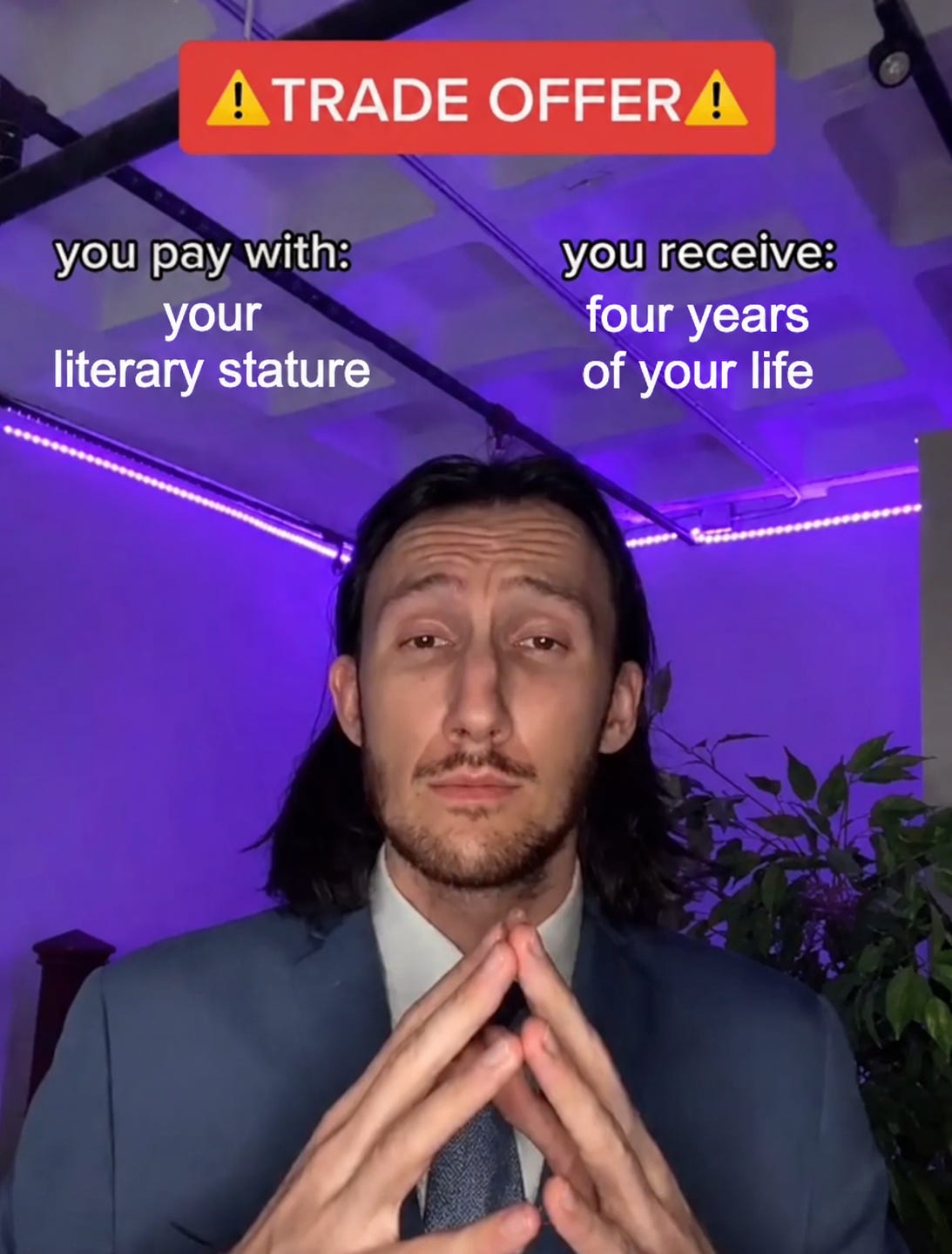
There’s some truth to Mitya’s framing. The cost I anticipated was the lowering of my potential literary stature. In exchange, I’d finish the novel 300% faster. Even if it actually cost more than expected — aside from the book club incident, the novel was also rejected by a big publisher and a big book store because of my AI use — the trade still makes sense. Four years is 10% of my probable remaining lifespan.
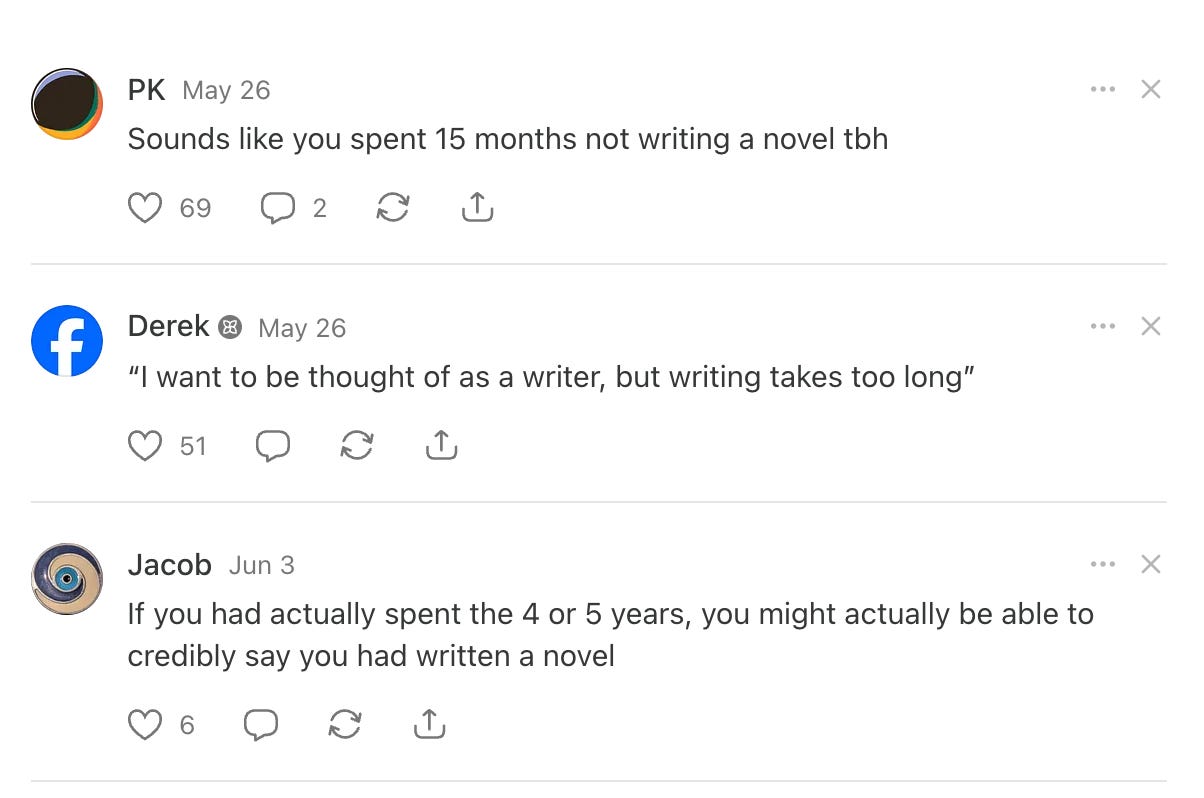
This way of thinking, I realized after interactions with internet anons, is fundamentally different to how many writers view their work. To some, writing is a source of personal growth, self-expression, and self-discovery. To others, it is identity (see screenshot below). To me, the novel was a mission. I did what I needed to do to get it done with the least possible cost — or at least with my preferred currency: status instead of time.
Perhaps my background in engineering and entrepreneurship made the difference. To those who see intrinsic value in artistic effort (eg, self-discovery), value = quality + effort. To me, value = quality/effort. I can’t stand unnecessary or performative suffering.
Once I saw that software was better than me at the task of arranging words to produce a certain experience within the reader, I felt relieved, to be honest. Raw ChatGPT had this cringey literary voice, but Claude (Sonnet 3.7 in the novel’s case) was able to produce good enough paragraphs, especially when it used my manually-written chapters as its samples to mimic. The main advantage of robots over humans is that they don’t get tired. So even if their average output is mediocre, you can just keep on asking for rewrites until you get lucky with good or even sometimes superb prose. And you can always do the finishing touches. LLMs accelerate the cycle of writing, simulating the reading experience, and rewriting. It still took a lot of cycles: the novel still took 15 months, not one day.
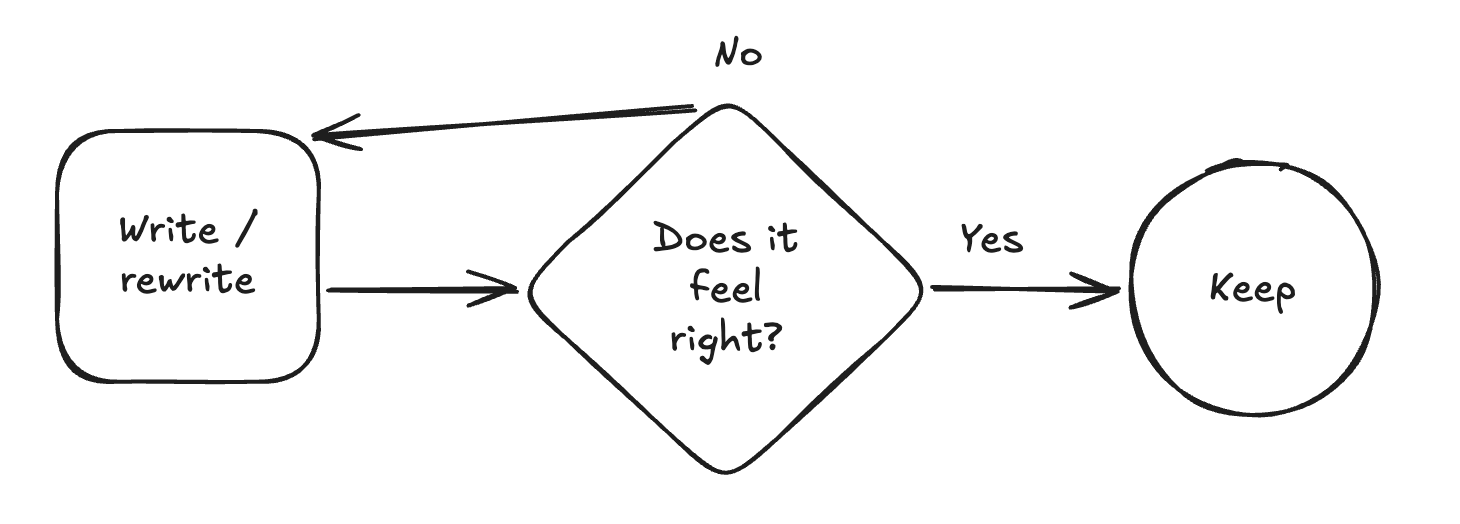
“One of the weirdest things from that experience was that I knew immediately whether a paragraph, a sentence, or a word was right or wrong,” I told Mitya. “Where did I get this knowledge?” The answer that feels right is neo-animist: it was a gift from the muses, from the diwata of the story. The part that robots couldn’t do was the story itself. Its expression through the right arrangement of words felt like mechanical labor. It was simply pattern-matching. Within the English language and within the voice of this novel, what arrangement of words would give the reader the experience intended by this section? That intention needs to come from a conscious, desiring, free being. However, it turns out the execution can be done by a machine, a pattern-matching convention machine, which is essentially what an LLM is. For the purpose of this essay, let me define this conventional pattern-matching as “craft.”
Given this definition, LLMs are great at the craft of writing but can’t do art. Let me define art here as a metacraft: a conversation between practitioners of the craft about the craft through the craft.
For instance, in much of literary fiction the arrangement of words itself is the artwork. For this arrangement to be a conversation between practitioners of the craft, it has to break convention; there is no metamessage in purely conventional prose. The most common metamessage, in my experience, is simply the display of virtuosity, and as a practitioner of the craft, it’s a joy to see mastery in action.
I find Mortimer Adler’s distinction between “enjoyable beauty” and “admirable beauty” useful here. Enjoyable beauty is the message. Admirable beauty is the metamessage. Bestsellers versus award winners. Enjoyable beauty might sometimes need disposition and education to be perceived — ie, taste — but generally it merely requires experience in being human. Perceiving admirable beauty, on the other hand, requires familiarity with the craft.
This is why art sometimes gets weird or even ugly. This is often my experience with critically acclaimed or award-winning contemporary literary fiction. I don’t enjoy the story as a reader but I enjoy witnessing the virtuosity as a craftsman. “Wow, what a move.” The best ones are those that work at both levels.
This enjoyment of beauty — both the enjoyable and admirable — I realize, is wordless. It’s the hmmm that emerges from your chest when you catch a delicious turn of phrase, or that bobbing of your head and that stankface you get from a sick beat. Art theory is the attempt to put this wordless admiration into words. This theorizing is itself a craft with its own practitioners and its own conversation. In literature, this conversation is literary criticism. I enjoy this conversation as a guy who likes explanations, but I find it constraining as a storyteller.
The conversations about craft I find useful are on how to practice the craft better, not a dissection of what the craft is saying. Some of the most popular of these handbooks are Stephen Pressfield’s War of Art, Ann Lamott’s Bird by Bird, Stephen King’s On Writing, and Julia Cameron’s The Artist’s Way. The one I follow though is Liz Gilbert’s Big Magic. I can’t stand her fiction lol, but this book is the foundation of my “neo-animist” approach to creative work. I think this is because her animism — treating ideas as living entities — short-circuits and therefore mutes the Apollonian, rationalist hard science supremacist within me.
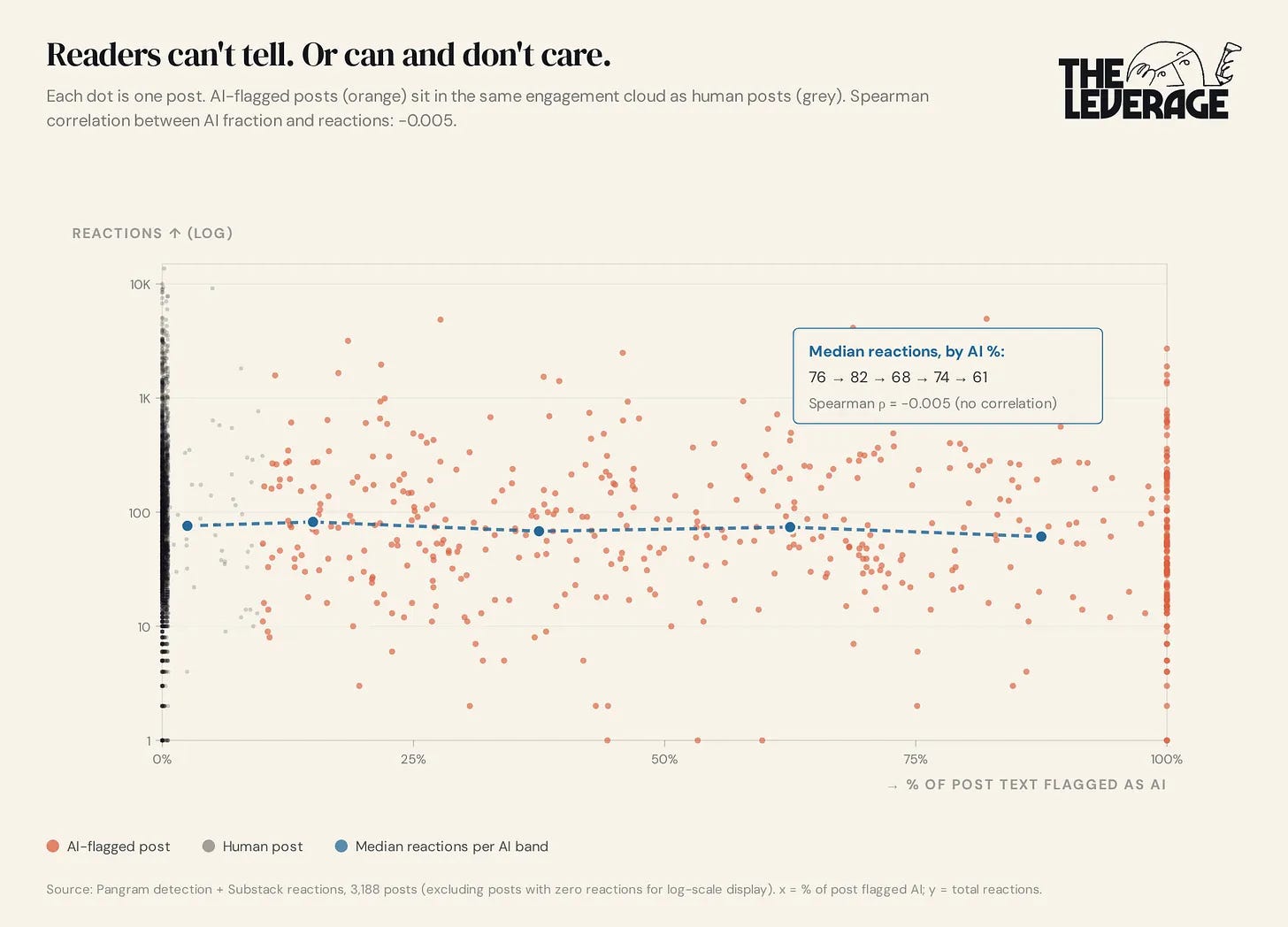
This difference between enjoyable and admirable beauty is also why the conversation about the craft is often invisible to most enjoyers of the craft’s products. One of the more surprising revelations from the deluge of AI-written content is that most readers can’t seem to hear literary voice or perhaps just don’t care. I’ve noticed this with viral Facebook post written with ChatGPTs cringey default voice. A Substack publication did the math on this. They “pulled the ten most recent posts from the top fifty publications across a sample of Substack Bestseller categories and ran every one through Pangram, an AI detection tool.” They found out that the level of AI detected in a post is irrelevant to its performance. “Readers can’t tell. Or can and don’t care.”
Writing for the literati versus writing for normal readers was not the only tension I felt as I was working on the story. From that experience, I realized that there are five kinds of writers within a novelist, and it is a zero-sum game between them within a pie whose size is dictated by your skill and talent:
Storyteller — narrative, anecdote, scene-setting, character
Wordsmith — lyrical prose, rhythm, vivid language, style-forward
Educator — clarity, explanation, instruction, accessibility
Scholar — research, citation, analysis, depth
Persuader — argumentation, rhetoric, calls to action, conviction
By the way, I vibe-coded (in a few hours!) an app that tells you the percentages of the five kinds of writers in your writing based on text you upload. Here are the results from the first chapter of Rajah Versus Conquistador and a “popular philosophy” article I wrote on the 2025 film Quezon. Try it out: https://writerdna.explorations.ph/
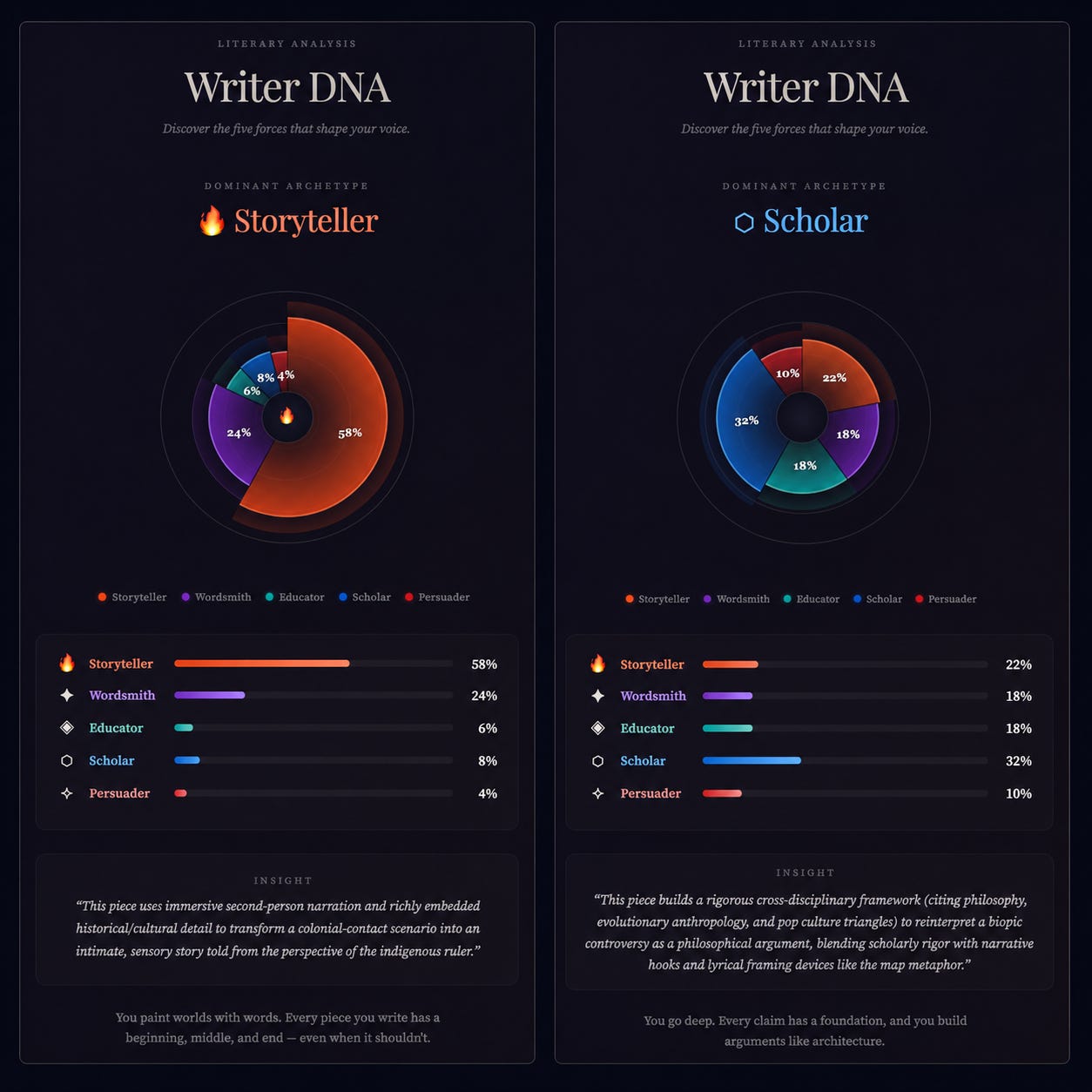
My mission was clear for Rajah Versus Conquistador. I was to write it mainly for the English-reading public within Cebu and the larger Cebuano-speaking world. The metaconversations are on the Cebuano experience; Philippine history and historiography, particularly on 1521; and the ideas of the French-American social theorist René Girard. These metacoversations are likely invisible to most readers, and they are not needed to enjoy the novel, but they are the outcome of the intellectual journey I had to undergo to be able to tell the story.
I practice the craft of prose, but virtuosity in it is not my art. For RVC, the necessary art had been the 4D epistemic chess that took years to play. Those who have been following this blog for years would have seen it happen:
Developing the Three Epistemologies model. This allowed me to escape the Epistemology of Truth, my native land, and enter the Epistemology of Power, so that I could faithfully depict the mind of a 16th century Austronesian king.
René Girard’s explanation of why ritual human sacrifice was ubiquitous prior to the Axial Age, and his engagement with Nietzsche’s own attempt to de-Christianize his own mind. This allowed me to present precolonial Bisaya cosmology in its own terms, and not through a modern Christian or post-Christian lens.
I even pursued an MA in Anthropology (I’m about to enter my thesis year), where I focused on the intersection of Girard’s scapegoat mechanism and the figure of the Southeast Asian orang besar or strongman — and the role of violence and ritual sacrifice within their political-economy.
I descended into this scholarly underworld and deconstructed my own received worldview so that I can tell the story of the rajah and the conquistador from their perspectives. As I wrote in my love letter to the Filipino diaspora,
Many Philippine historical novels use the past to deliver moral lessons for the present. The past becomes a mirror, reflecting contemporary concerns. I wanted to do the opposite. I wanted to use the present to fill the gaps of the historical and anthropological record, the way modern DNA is used to complete dinosaur genomes in Jurassic Park. Magellan’s chronicler, Antonio Pigafetta, recorded 160 Cebuano words in 1521, and surprisingly, I could understand most of them. If there’s any truth to the Sapir-Whorf hypothesis—that language is an expression and frame of culture—then I share a lot of the cultural DNA of Humabon and Lapulapu.
I didn’t want to make Humabon a proto-nationalist hero or a victim of European treachery. I wanted to encounter him as he might have seen himself—an orang besar, a big man of maritime Southeast Asia...
The definition of “art” I present here — a conversation among practitioners of the craft about the craft through the craft — emerged from my daily immersion across more than a year of using LLMs to translate a story I saw in my mind’s eye into conventionally beautiful prose. Contrasting it to “craft,” which I defined here as conventional pattern-matching, allows us to delineate more precisely what is human in creative work that use machines.
This question is not new. Lace makers, alongside hand loom weavers, are the classic case: by the early 1800s, machines like the Leavers loom could imitate what had taken them years to master by hand, closely enough that buyers stopped telling the difference. Craft, it turned out, was what the machine could take and do faster and cheaper than humans. This automation of production through knowledge codified in objects is the true source of the increasing wealth of the world.
The question of “what is art?” in the context of the mechanization of craft is also not new. Photography forced painting to answer it once, and painting’s answer was to abandon representation and retreat into what only a hand could do. Damien Hirst, a century later, answered differently — he barely touches his own spot paintings — and simply moved art into the concept, leaving craft entirely to assistants.
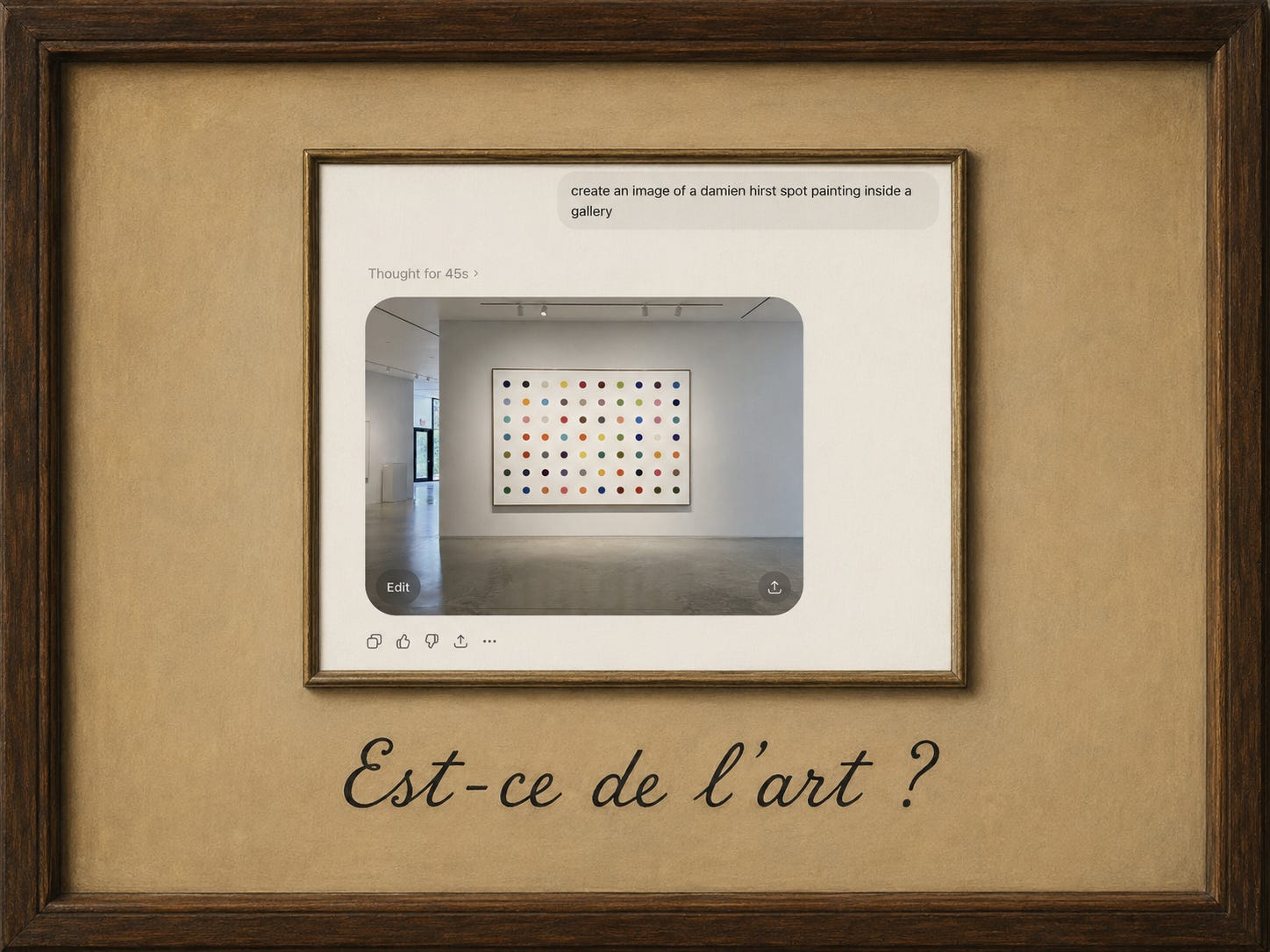
The definitions of “craft” and “art” I propose here might be better tools for discussing art in the age of AI than the one-drop rule of AI sloppage and declarations of purity. Let’s try it out on Rajah Versus Conquistador:
I think I could say that it is a well-crafted novel, based on the reviews of the book club (before the AI taboo emerged). They experienced the enjoyable beauty of the story. The story is extremely unconventional, but the prose is quite standard. It has a few bangers — both from me and from the robot — that readers quoted, but they are likely too normal for the book to win literary awards.
And Caroline Hau, who has professor-level lenses for seeing admirable beauty, wrote this blurb for the book:
Rajah Versus Conquistador is meticulously researched, populated by vivid characters, and propelled by suspenseful storytelling. Kahlil Corazo has taken a bold step by engaging in a new, self-reflexive process of literary creation, one that may prove to be generative as we debate the question of authorship in the age of AI.
I’m still awaiting the first Girardian review of RVC, but one of its first reviews actually came from someone much more familiar with 1521 fiction than I am. Rise Fuentes’ “Days of 1521,” posted on his blog in lieu of a field guide, situates the novel against nearly a century of Magellan-Lapulapu fiction in books and film, from Zweig to Lav Diaz’s Cannes film:
In Rajah Versus Conquistador, Corazo delivered a nuanced interpretation of history: heady, inspired, and feasible. It was a compelling version and vision of 1521, a provocative addendum to the national imaginary... The novel was a refreshing counterpoint to the hagiographic and colonialist biographies and films of Magellan or the nationalist myth-rendering of Lapulapu.
Producing that story was the hardest and longest creative endeavor I’ve done. It needed a strange trance-like mental state which really felt supernatural or magical. It was also a weird kind of suffering, and I’m not sure if I could have sustained that state of mind and endured that suffering for years. Having access to the most advanced prose-crafting machine known to man allowed me to focus on the craft of storytelling, epistemic self-surgery, and whatever unnamed arts I had to employ to turn the vision of RVC into reality.
“We can’t be artists in everything,” I told Mitya after we talked about how we used AI for tasks we need to do for money. We have no disagreement here. Mouths need to be fed and bills have to be paid, but we both want to spend less time inside Technocapital so we can have more time for our true work. The tension is in our treatment of prose. He is a literary fictionist and prose is his sacred art. To me, prose was merely a channel for story, so I had no qualms in using a machine to produce it.
Mitya: I have the deepest respect for your craft and your art. I hope this essay helps you see where I’m coming from. Thank you once again for accompanying me in that insane journey of producing what might end up being the most beautiful thing I’ll ever create in this short time we have in this world.